In Orange County, we’re seeing more and more older stucco homes dealing with hidden waterproofing failures. The outside of the home often looks perfectly fine — smooth finish, no major cracks, clean paint or texture.
But behind that stucco, the wall system may be slowly breaking down.
Homes built before the 1970s were typically constructed with only one layer of building paper and, in many cases, no weep screed at the base of the wall. Over time, building science showed us that stucco is not waterproof — it sheds water, but moisture can still pass through it. When the waterproofing layer behind it deteriorates, water has nowhere to go.
And that’s where the trouble begins.
Many older homes in Orange County share a few common risk factors:
- No weep screed installed at original construction
- Single-layer 30-minute building paper
- Organic material (soil, mulch, planters) sitting against the wall
- Sprinklers constantly hitting the base of the stucco
Without a functioning weep screed, trapped moisture can’t drain properly. When soil or landscaping covers the base of the wall, it holds moisture exactly where the waterproofing system is most vulnerable. Add years of irrigation exposure, and the breakdown accelerates.
Over time:
- Building paper disintegrates
- Metal lath begins to rust
- Wood framing absorbs moisture and starts to rot
And often, none of this is visible from the outside.
The Exterior Can Look Fine
This is what makes the issue so misleading.
You may not see cracking or surface damage. The stucco can look solid and stable. But inside the wall cavity, moisture may already be compromising the structure.
Homeowners usually discover the problem when they notice:
- Water stains on drywall after heavy rain
- Musty smells inside the home
- Mold growth along baseboards or interior walls
By the time these signs appear, repairs often involve more than simple stucco patching. Mold remediation and structural wood replacement can quickly drive costs up.
A Simple Early Warning Sign
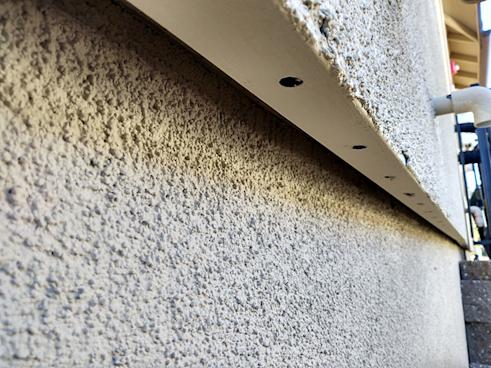
One of the easiest ways to check your home is to inspect the very bottom of your stucco walls.
If your weep screed is:
- Rusted through
- Flaking apart
- Buried below soil
- Missing entirely
…it may be time to open up a small section and inspect the waterproofing behind it.
Catching deterioration early can save thousands of dollars and protect your indoor air quality before the issue spreads deeper into the home.
The Right Way to Fix It
When these issues are addressed properly, the repair typically involves:
- Removing stucco at the base of the wall
- Replacing deteriorated building paper
- Installing modern weather-resistant barriers
- Adding or replacing a functional weep screed
- Rebuilding the stucco system so it drains correctly
The goal isn’t just to make it look good again. It’s to rebuild the wall system so moisture can escape instead of becoming trapped.
Protecting Your Investment — And Your Health
Water intrusion doesn’t usually happen all at once. It builds slowly over time. That’s why it’s so important to evaluate older homes before obvious damage appears inside.
If your home was built before the 1970s, especially here in Orange County where irrigation and landscaping are common along exterior walls, it may be worth having the base of your wall system evaluated.
Your stucco might look fine.
But what’s happening behind it is what truly determines the long-term health of your home.


 View All our Links on Linktree